- Home
- News
- News items
- Light + Building 2026: Our key takeaways from Frankfurt
Light + Building 2026: Our key takeaways from Frankfurt
For those who couldn’t attend, this is a quick look at what happened.
For those who did attend, hopefully this brings back a few highlights and sparks some reflection on what’s next for our industry.
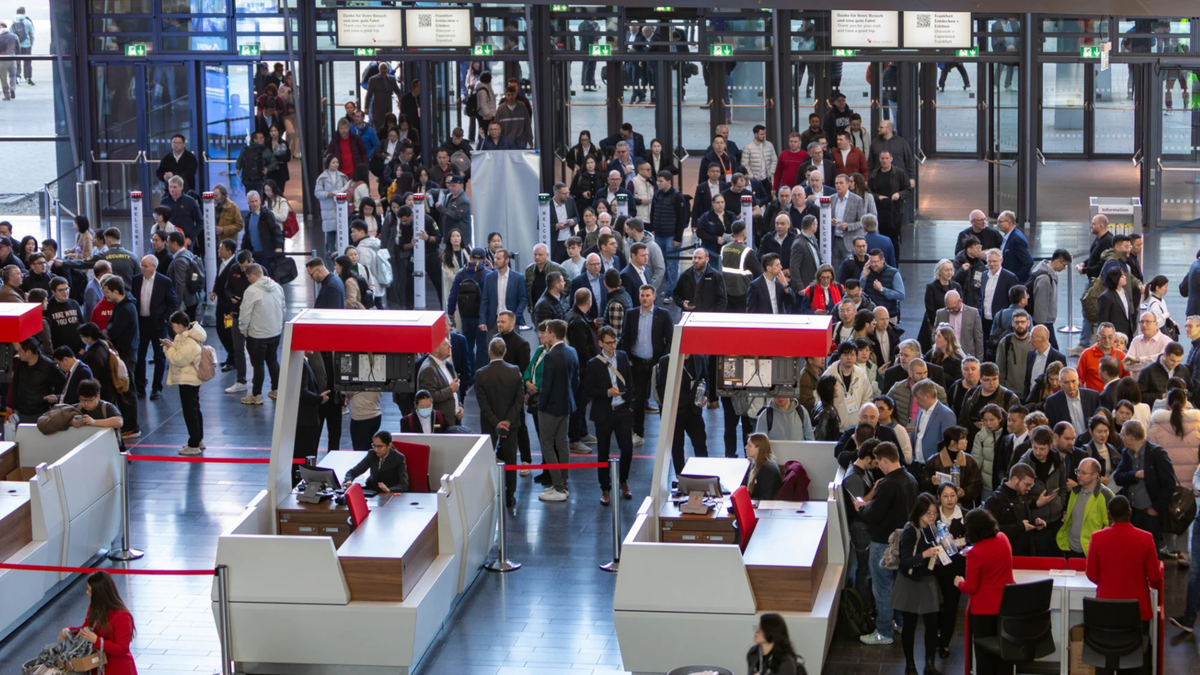
Light + Building 2026 once again confirmed its position as the world’s leading trade fair for lighting, building technology, and intelligent building automation. Held in Frankfurt at Messe Frankfurt, the event brought together architects, engineers, integrators, designers, and manufacturers from all over the world.
This year’s edition hosted around 2,000 exhibitors and welcomed over 140,000 visitors, reinforcing its role as the central meeting point for innovation in smart buildings and automation.
Ivory Egg at Light + Building
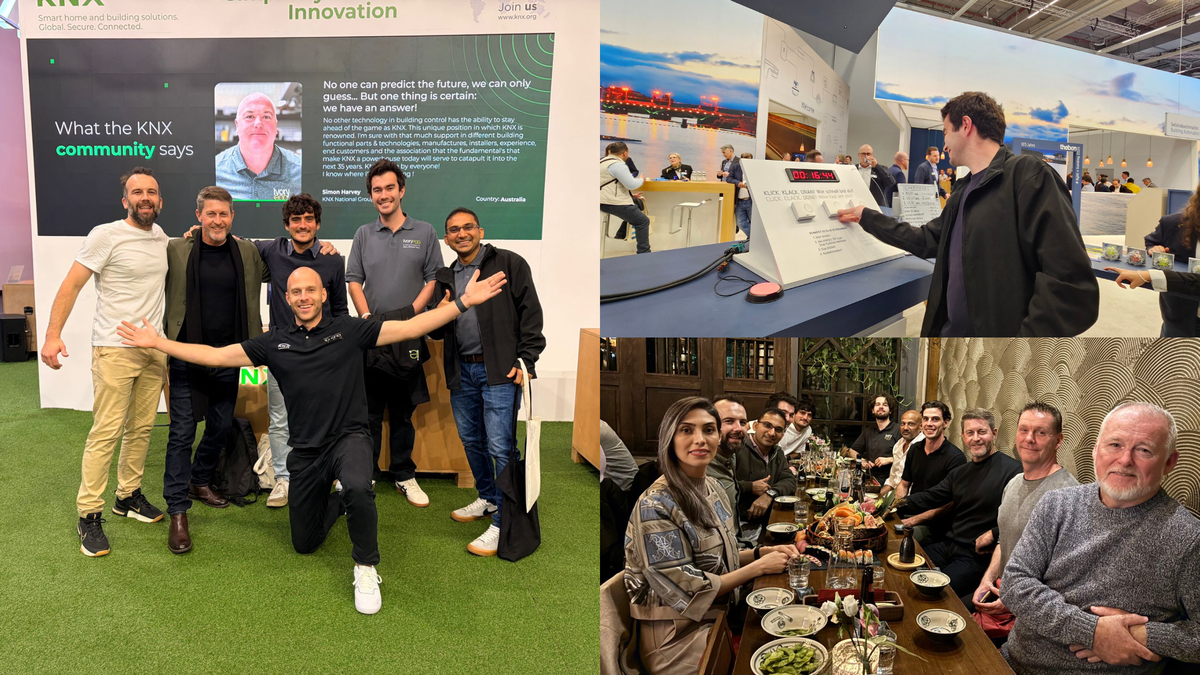
Part of our team attended this year's show:
- Rajesh Sunkari – Technical Support Engineer
- Serge Hrouda – Business Development Manager
- Craig Chapman – CEO
We also had the pleasure of bringing a group of key customers who achieved their annual targets, giving them the opportunity to experience the show first-hand and connect directly with the industry at its source.
First Impressions
“My first time attending Light + Building, and what stood out most was the sheer scale of innovation. Over 2,000 exhibitors across lighting, building automation, and smart technologies. The KNX presence alone was massive, and it really highlighted where the industry is heading.” (Rajesh)
“What really surprised me was how strongly KNX continues to dominate. With more than 140 KNX manufacturers exhibiting, there was a clear sense of momentum around KNX IoT and energy management solutions.” (Serge)
Key Themes Across the Show
Across all halls and manufacturers, a few clear trends stood out:
1. Energy management & sustainability ⚡
This was arguably the strongest theme of the entire show. From HVAC optimisation to load balancing and EV integration, energy intelligence is now at the core of building automation conversations.
2. KNX IoT is becoming reality 🌐
What was once “future talk” is now turning into real products. Multiple manufacturers showcased KNX IoT-native devices, signalling a clear shift toward IP-based building communication.
3. Security as a standard 🔐
KNX Secure and Data Secure were everywhere. Security is no longer an optional extra, it is becoming a baseline expectation.
4. Better tools for integrators 🧰
From ETS 6.4 improvements to manufacturer-level commissioning tools, there is a strong push to reduce installation time, simplify workflows, and improve diagnostics.
Supplier Highlights
✔ ABB
ABB showcased its Building Pro Edge platform, a modular building automation solution designed for commercial and mixed‑use environments. It integrates KNX, energy management, and cloud‑based analytics into a single ecosystem, positioning ABB strongly in the smart‑building and sustainability space.
Key highlights:
- A strong focus on energy optimisation, with dashboards and tools aimed at reducing consumption across HVAC, lighting, and building services.
- Improved KNX integration, making it easier to combine ABB’s commercial automation with existing KNX infrastructure.
- Enhanced cloud connectivity for remote monitoring, diagnostics, and portfolio‑level management.
- A more unified interface across ABB’s building automation range, signalling a move toward a cohesive platform strategy.
ABB’s direction is clearly center on scalable, cloud-connected building management with sustainability at its core. Their direction is aimed at larger commercial projects, but the improvements in KNX integration and energy management will also benefit high‑end residential and multi‑dwelling applications. The overall impression is of a brand investing heavily in interoperability, sustainability, and long‑term platform consistency.
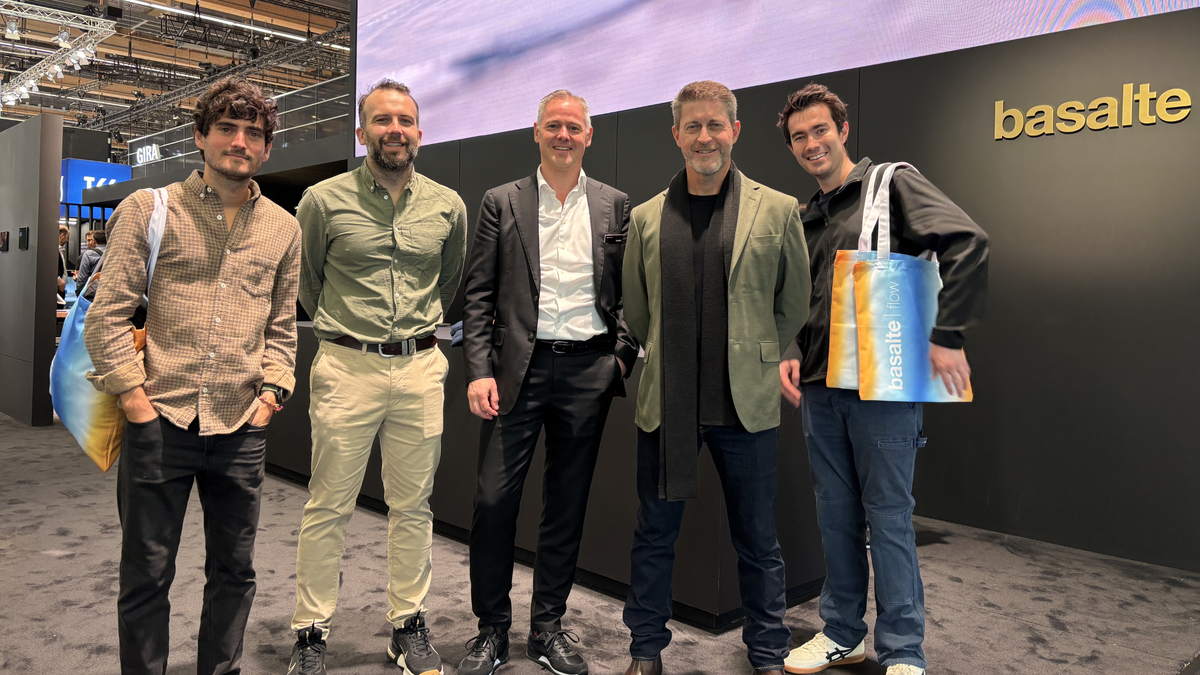
✔ Basalte
Basalte’s stand was, as always, minimalist, premium, and design‑led, delivering one of the most visually refined stands at the show.
Highlights included:
- New TV stand concept
- Flow HCL (Human-Centric Lighting integration)
- Core Super with built‑in NVR (Network Video Recorder)
- DALI gateway developments
- New and improved Miro remote
The direction is clear: To blend luxury aesthetics with tightly integrated KNX‑based smart home control.
✔ ESYLUX
ESYLUX showcased further development of its DALI-2 lighting and automation ecosystem, with a clear emphasis on scalability, energy efficiency, and sensor-driven control.
Key highlights included:
- The APC Ethernet Link, enabling centralised management of up to 16 DALI-2 lines, simplifying control of larger lighting systems with group functions and system-wide overrides.
- Expansion of the LENJA luminaire series, combining DALI-2 integration, Tunable White lighting, and presence-based control to optimise both comfort and energy consumption in indoor environments.
- Updates to the WILMA façade lighting range for outdoor applications, including adjustable colour temperatures and optional motion detection for adaptive lighting behaviour.
Impressions:
ESYLUX continues to move toward more integrated, sensor-driven lighting solutions that reduce engineering complexity while improving performance. Their direction aligns strongly with energy-efficient building design, particularly in projects where lighting automation plays a key role in overall system strategy.
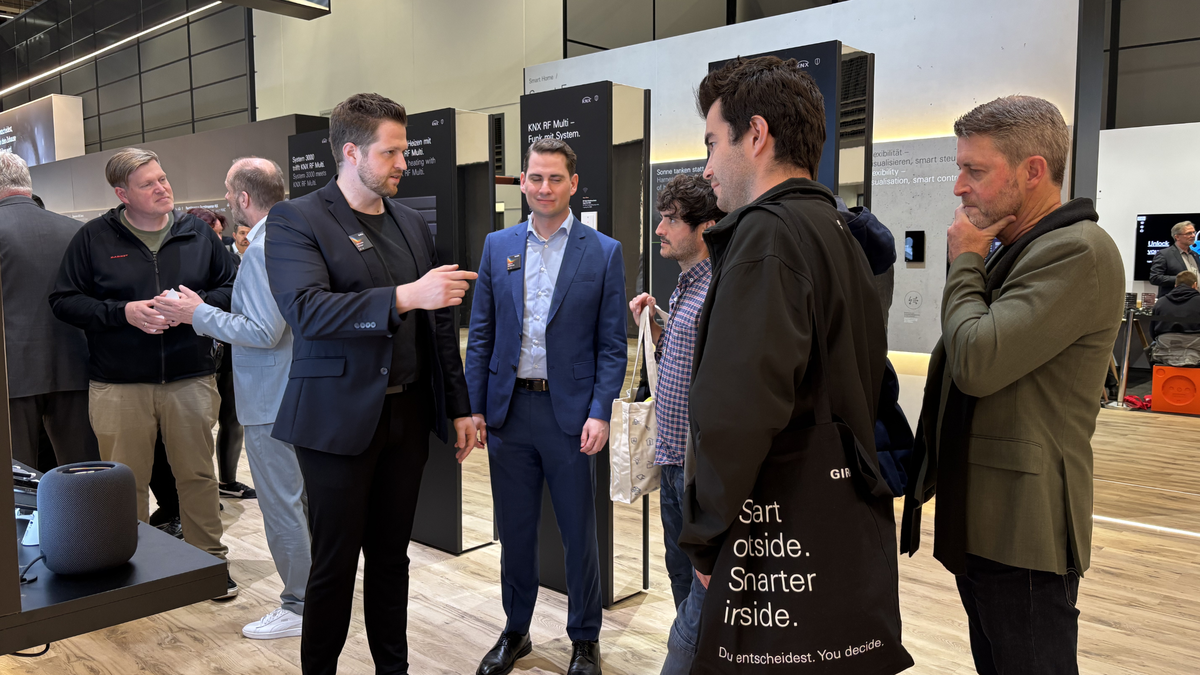
✔ Gira
Gira maintained their consistently strong presence, as expected from one of the major KNX players.
They presented:
- Updated KNX user interfaces
- Improvements to Gira X1 and Gira G1 ecosystems
- New design lines and finishes
- Soon to be released System 106 IP Intercom
Gira’s booth reinforced their reputation for reliability, design quality, and long‑term platform stability.
✔ JUNG
JUNG maintained a strong focus on design-led KNX automation, combining usability with a broad and evolving product portfolio across residential and commercial applications.
Highlights included:
- New compact KNX devices such as presence detectors and multi-function actuators, designed to simplify installation while covering key functions like lighting, shading, and climate control within a single system.
- Further development of the KNX DALI-2 Gateway Colour, enabling more advanced control of Tunable White and RGB lighting, with greater flexibility in scene creation and energy optimisation.
- Updates to the LS TOUCH room controller, with improved dimming performance and more intuitive scene handling for everyday use.
- Continued expansion of Young Home and Hospitality solutions, aimed at delivering consistent design, simple operation, and flexible control across residential and hotel environments.
Impressions:
JUNG’s direction continues to balance technical capability with clean, consistent design. Their focus is clearly on simplifying installation while maintaining flexibility for integrators, particularly in projects where lighting control and user experience play a central role.
✔ KNX / ETS Updates
ETS 6.4 updates:
The KNX Association used Light + Building to highlight the newest capabilities of ETS 6.4, with a clear focus on speeding up commissioning and improving workflow efficiency for integrators. The updates shown at the KNX booth were practical, mature, and aimed squarely at reducing repetitive tasks.
Key improvements included:
- Bulk Linking & Multi‑Linking
These new tools allow integrators to link multiple channels, group objects, or functions in a single action. This is especially useful for large lighting or HVAC projects where repetitive linking has traditionally consumed a lot of time.
- Smart Linking
Demonstrated live at the show, Smart Linking automatically recognises compatible functions between devices and proposes logical connections. It’s a step toward more intuitive project setup and reduces the chance of configuration errors.
- Improved UI Responsiveness & Stability
While less flashy, the smoother interface and faster project handling were noticeable and well‑received by integrators who work with large or complex KNX files.
New Feature Preview: KNX Secure QR Code Scanning
One of the most talked‑about previews came from the e‑house booth, where KNX demonstrated an upcoming feature that will allow integrators to add devices to a project simply by scanning their KNX Secure QR codes.
This is not yet released, but the concept is significant:
- Faster device registration
- Automatic import of secure keys
- Reduced manual entry errors
- A more modern commissioning workflow
It also signals KNX’s continued push toward stronger cybersecurity and simplified secure device onboarding, which will become increasingly important as KNX IoT devices grow in number.
✔ Lithoss
Lithoss made a notable return to Light + Building after several years without a dedicated booth. Their presence this year focused heavily on design craftsmanship, premium materials, and modular switch concepts, reaffirming their position as one of the most distinctive design‑driven brands in the KNX ecosystem.
Highlights:
- Updated finishes and material options across their iconic switch ranges.
- New modular configurations aimed at giving integrators more flexibility in bespoke projects.
- Subtle refinements to back‑end KNX compatibility, ensuring smoother integration with modern KNX installations.
Impressions:
Lithoss continues to stand out for its architectural design language and meticulous attention to detail. Their direction appears focused on high‑end residential and boutique commercial projects where aesthetics are as important as functionality. The booth felt like a statement of renewed momentum. A brand returning with confidence and a clear design‑first identity.
✔ MDT
MDT was one of the most talked‑about KNX manufacturers at Light + Building, with a booth that was consistently busy from open to close. Their presence reinforced MDT’s position as a performance‑driven, integrator‑focused brand that continues to innovate rapidly within the KNX ecosystem.
Key updates included:
- New generations of KNX actuators with improved channel diagnostics, faster response times, and enhanced energy‑monitoring capabilities
- Updated pushbutton lines, including new finishes and more flexible LED feedback options
- Refinements to their logic and automation modules, making complex KNX logic easier to implement without external servers
- A continued emphasis on KNX Secure, with more devices supporting secure commissioning and encrypted communication
Product highlights:
MDT’s new actuator families were a standout, offering:
- Higher switching capacities
- More granular status reporting
- Improved protection features
- Faster bus communication
Their pushbutton range also drew a lot of attention, especially the models with multi‑colour status LEDs and tactile feedback — features that integrators appreciate for both usability and aesthetics.
Impressions:
MDT’s booth reflected a brand that listens closely to integrators. Their products remain:
- Technically robust
- Feature‑rich
- Competitively priced
- Designed for real‑world installation challenges
The overall direction feels very much aligned with the needs of the KNX market: faster devices, better diagnostics, stronger security, and tools that reduce commissioning time. MDT continues to strengthen its reputation as one of the most reliable and forward‑thinking KNX manufacturers, and their momentum at the show suggests even more innovation ahead.
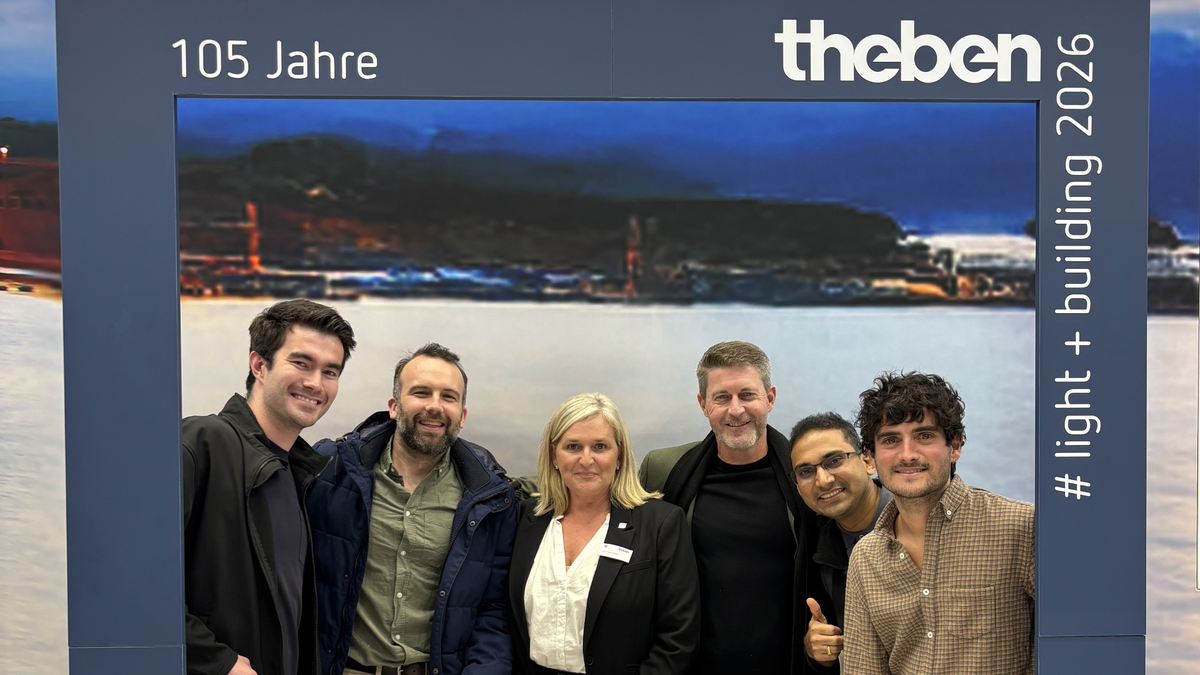
✔ Theben
Theben used Light + Building 2026 to reinforce its strong commitment to KNX as the foundation for intelligent and energy-efficient building automation. Their showcase focused on practical, real-world solutions designed to address current challenges such as rising energy costs, sustainability requirements, and flexible building usage.
Key highlights included:
- KNX-based energy management for lighting, HVAC, and shading, focused on optimising consumption and load balancing
- Support for photovoltaic integration and e-mobility applications within KNX environments
- Advanced KNX presence and motion detectors for demand-driven lighting and room control
- Strong emphasis on interoperability, scalability, and KNX Secure
Impressions:
Theben’s direction is clearly centred on practical energy efficiency and reliability. Their solutions focus on helping integrators deliver smarter, more adaptable buildings without adding unnecessary complexity, aligning closely with the broader industry shift toward sustainable and data-driven automation.
✔ ThinKNX
Check out their stand
ThinKNX used Light + Building to showcase a more mature and unified ecosystem across their server lineup. Their focus this year was on scalability, multi‑server architecture, and cloud‑based supervision, reflecting the growing demand for centralised monitoring across large residential or commercial portfolios.
Key developments:
- Enhancements to ThinKNX Building Solutions, with smoother visualisation workflows and improved UI responsiveness.
- Major progress on the ThinKNX Cloud, enabling integrators to connect multiple servers into a single, centralised monitoring and management environment.
- More robust remote access tools, aimed at reducing on‑site maintenance and improving long‑term serviceability.
- Continued refinement of their logic engine and integration drivers, reinforcing ThinKNX as a flexible multi‑protocol gateway.
Cloud developments:
The new cloud features were one of the standout elements. The ability to aggregate multiple ThinKNX servers into a unified dashboard is particularly valuable for:
- Multi‑dwelling developments
- Hospitality projects
- Distributed commercial sites
- Integrators offering managed service contracts
This direction positions ThinKNX as not just a visualisation platform, but a fleet‑level building management tool.
Impressions:
ThinKNX continues to evolve in a way that supports integrators who need both flexibility and scale. Their booth demonstrated a clear commitment to:
- Strong KNX integration
- Multi‑protocol interoperability
- Cloud‑first monitoring
- Clean, modern UI design
Overall, ThinKNX is moving confidently toward a hybrid model where local KNX control is paired with cloud‑based oversight, a trend that aligns with the broader direction of the smart building industry.
✔ Zennio
Zennio was one of the 140+ KNX manufacturers exhibiting at the show, reinforcing its strong position in residential and hospitality automation. Their booth focused on design‑driven KNX interfaces and expanded HVAC integration options.
Key updates included:
- Updated touch panels and room controllers
- New KNX actuators designed to simplify installation
- Continued expansion in hotel and residential automation
Overall, Zennio continues to push toward visually appealing, user‑friendly KNX devices with a clear focus on the premium residential and hospitality sectors.
Final Thoughts
Light + Building 2026 confirmed a few clear directions for the industry:
Industry trends:
- Sustainability and energy management were dominant themes.
- KNX IoT is gaining real traction, with first‑generation devices now shipping.
- Cybersecurity (KNX Secure, Data Secure) is now a core expectation.
- Cloud‑connected building platforms (ABB, ThinKNX, etc.) are becoming standard.
Shifts in KNX / smart home direction:
- More emphasis on interoperability with Matter, DALI‑2, and IP‑based systems.
- Stronger focus on user experience and design (Basalte, Gira, Lithoss).
Supplier changes worth noting:
- MDT and Zennio continue to grow aggressively.
- ABB and Siemens are pushing deeper into cloud‑based building management.
General KNX Direction Observed at the Show
Across the KNX ecosystem, several themes were clear:
- KNX IoT is moving from concept to reality
More manufacturers showcased KNX IoT‑native devices, and the KNX Association emphasised the long‑term shift toward IP‑based communication.
- Sustainability and Energy Management is becoming a core KNX application
Many booths highlighted load balancing, EV charging integration, and dynamic energy optimisation — all areas where KNX is positioning itself strongly.
- Security is now standard, not optional
KNX Secure and Data Secure were heavily promoted, and many manufacturers are now shipping secure‑ready devices by default.
- Better tools for integrators
The updates to ETS, combined with new diagnostic and commissioning tools from various manufacturers, show a clear industry focus on reducing installation time and improving reliability.
Looking Ahead
The next wave of innovation we expect to see:
- More KNX IoT‑native devices.
- Greater integration with AI‑driven energy optimisation.
- More cloud‑first building management platforms.
- Continued design innovation in switches, touch panels, and sensors.
Opportunities:
- KNX energy management solutions.
- Multi‑protocol gateways (KNX + DALI + Matter).
- Premium design‑focused control hardware.